Every home has food scraps: onion ends, apple cores, coffee grounds, wilted lettuce, pizza crusts, even forgotten leftovers. They look like trash, but they’re not. They’re one of the most powerful tools you have to reduce climate pollution and protect California’s land, food, water, and air.
Food scraps and yard waste make up nearly half of what ends up in our landfills. When buried, they create methane, a climate pollutant with 84 times more heat trapping power than carbon dioxide. Recycle those same scraps in your green bin, and they become clean energy or nutrient-rich compost that nourishes California’s farms, gardens, and green spaces. That’s why the state made organics recycling a priority, because everyday actions add up.
The good news: doing your part is quite simple.
What to Put in Your Green Organics Bin
Check iRecycleSmart.com for your local rules, but generally these items belong in your green bin:
Fruit and vegetable scraps
Coffee grounds and tea bags
Eggshells
Leftover plate scrapings
Food-soiled paper (greasy pizza boxes, used napkins — if accepted locally)
Creates nutrient-rich compost for farms, parks, and community gardens
Improves soil health and reduces the need for chemical fertilizers
Helps California meet statewide climate goals
Reduces household trash every week
The impact is real. And it’s visible.
You Can Shape a Greener California
When you place food scraps and yard trimmings into your green bin, you’re participating in something much bigger, which is a statewide effort to protect air quality, reduce pollution, and return nutrients to the earth.
One countertop container. One weekly routine. One household choosing to rethink “waste” and think beyond the bin.
That’s how meaningful change begins: small steps, repeated often, spreading across neighborhoods and communities until it becomes the new normal.
For more information, check out our FAQs to review commonly asked questions and answers to learn more.


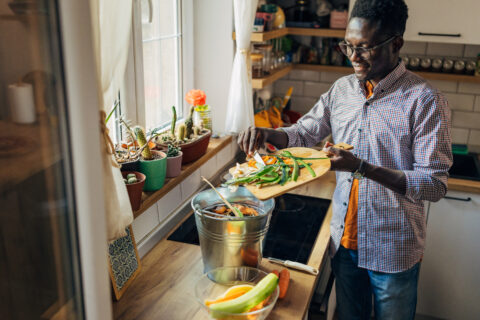



Every home has food scraps: onion ends, apple cores, coffee grounds, wilted lettuce, pizza crusts, even forgotten leftovers. They look like trash, but they’re not. They’re one of the most powerful tools you have to reduce climate pollution and protect California’s land, food, water, and air.
Food scraps and yard waste make up nearly half of what ends up in our landfills. When buried, they create methane, a climate pollutant with 84 times more heat trapping power than carbon dioxide. Recycle those same scraps in your green bin, and they become clean energy or nutrient-rich compost that nourishes California’s farms, gardens, and green spaces. That’s why the state made organics recycling a priority, because everyday actions add up.
The good news: doing your part is quite simple.
What to Put in Your Green Organics Bin
Check iRecycleSmart.com for your local rules, but generally these items belong in your green bin:
What Should Not Go in the Organics Bin
Keeping the stream clean ensures compost facilities can safely turn your scraps into soil:
How to Make Simple Habits That Stick
You don’t need a perfect system. Just a small routine that fits into your day:
A routine built on these steps turns your kitchen into a quiet climate solution.
Why Your Efforts Matter
Recycling your food scraps is one of the most direct ways Californians can make a measurable difference.
When you Curb Your Food Scraps:
The impact is real. And it’s visible.
You Can Shape a Greener California
When you place food scraps and yard trimmings into your green bin, you’re participating in something much bigger, which is a statewide effort to protect air quality, reduce pollution, and return nutrients to the earth.
One countertop container. One weekly routine. One household choosing to rethink “waste” and think beyond the bin.
That’s how meaningful change begins: small steps, repeated often, spreading across neighborhoods and communities until it becomes the new normal.
For more information, check out our FAQs to review commonly asked questions and answers to learn more.