Let’s be honest, composting can sound a little gross at first. No one wants smelly food scraps, slimy leftovers, or bugs in the kitchen. The good news is that composting doesn’t have to be yucky or messy when it’s done the right way.
That breakdown of materials people worry about is actually part of a natural process! And when food scraps are managed properly, composting can be clean, simple, and odor-free.
When we throw food in the trash instead of the green bin, it ends up in landfills and releases methane, a powerful greenhouse gas that has 80 times more heat-trapping power than CO2. That pollution accelerates climate change and warms our planet.
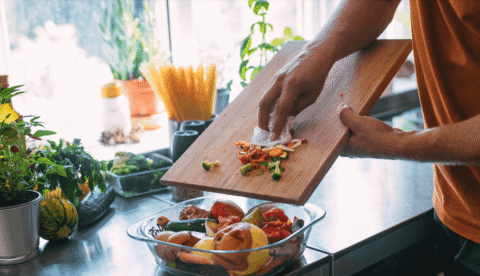
Collect food scraps in a small bin, metal caddy, or other container that fits on your countertop or under your sink. Containers with tightly fitting lids usually work best. Empty the bin regularly to prevent odors.
Pro tip: Natural deodorizers like baking soda, coffee grounds, or a charcoal filter can keep bins smelling fresh.
Line Your Bin
Lining your bin makes cleanup easier and helps absorb moisture. Use paper bags, kraft paper, or used napkins/paper towel to line your bin. Never use regular plastic trash bags because they’re not compostable.
Pro tip: Some composting programs allowed certified compostable plastic bags but check your local rules at iRecycleSmart.com to verify.
Don’t Forget Your Freezer
If smells are still a concern, use your freezer. If you have space, store food scraps in a reusable container or paper bag in your freezer until it’s time to transfer the contents to your outdoor green bin on pickup day. Frozen food scraps don’t smell or attract pests.
After emptying your kitchen bin into your outdoor green bin, give it a quick wash. Baking soda and white vinegar work well or use mild soap and warm water.
Pro tip: Rinse your outdoor green bin regularly and let it air dry in the sun. It helps if you layer your food with yard waste or food-soiled paper, like greasy pizza boxes.
Be Consistent
Even if your green bin isn’t full, put it out on collection day. Letting food scraps sit for weeks can lead to odors and pests. Regular emptying keeps everything cleaner.
Pro tip: Set a weekly reminder so you never miss pickup day.





Let’s be honest, composting can sound a little gross at first. No one wants smelly food scraps, slimy leftovers, or bugs in the kitchen. The good news is that composting doesn’t have to be yucky or messy when it’s done the right way.
That breakdown of materials people worry about is actually part of a natural process! And when food scraps are managed properly, composting can be clean, simple, and odor-free.
When we throw food in the trash instead of the green bin, it ends up in landfills and releases methane, a powerful greenhouse gas that has 80 times more heat-trapping power than CO2. That pollution accelerates climate change and warms our planet.
Putting food scraps in your green bin is a small daily habit that makes a big difference. Composting helps cut methane emissions, reduce food waste, and return nutrients to the soil. Here are some simple ways you can recycle food scraps while keeping your spaces clean and smelling fresh.
Countertop Bins with Lids
Collect food scraps in a small bin, metal caddy, or other container that fits on your countertop or under your sink. Containers with tightly fitting lids usually work best. Empty the bin regularly to prevent odors.
Pro tip: Natural deodorizers like baking soda, coffee grounds, or a charcoal filter can keep bins smelling fresh.
Line Your Bin
Lining your bin makes cleanup easier and helps absorb moisture. Use paper bags, kraft paper, or used napkins/paper towel to line your bin. Never use regular plastic trash bags because they’re not compostable.
Pro tip: Some composting programs allowed certified compostable plastic bags but check your local rules at iRecycleSmart.com to verify.
Don’t Forget Your Freezer
If smells are still a concern, use your freezer. If you have space, store food scraps in a reusable container or paper bag in your freezer until it’s time to transfer the contents to your outdoor green bin on pickup day. Frozen food scraps don’t smell or attract pests.
Pro tip: Learn what belongs in the green bin and how to best Curb Your Food Scraps.
Cleanliness Is Key
After emptying your kitchen bin into your outdoor green bin, give it a quick wash. Baking soda and white vinegar work well or use mild soap and warm water.
Pro tip: Rinse your outdoor green bin regularly and let it air dry in the sun. It helps if you layer your food with yard waste or food-soiled paper, like greasy pizza boxes.
Be Consistent
Even if your green bin isn’t full, put it out on collection day. Letting food scraps sit for weeks can lead to odors and pests. Regular emptying keeps everything cleaner.
Pro tip: Set a weekly reminder so you never miss pickup day.
For More Useful Pro Tips
Browse our other articles on Food Scraps, including a popular article on Easy Ways to Curb Your Food Scraps. You can also get Tips for Food Recycling on iRecycleSmart.com!
Last tip: If you don’t have curbside composting, check out this article on what you can do.